


October is ADHD Awareness Month and we want to champion and celebrate neurodiversity in all it’s forms. At Autism West Midlands we love to meet neurodiverse individuals and share their stories to our community.
We recently had the pleasure recently of speaking with inspirational fifteen-year old Joshua Cox and his Mum, Joanne, about his fantastic sporting achievements and upcoming World Championships in South Africa.
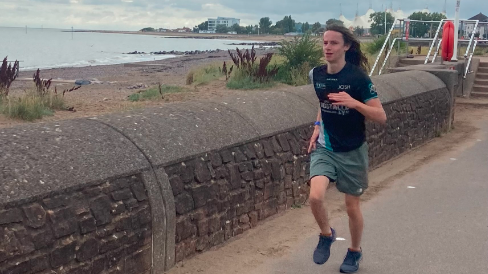
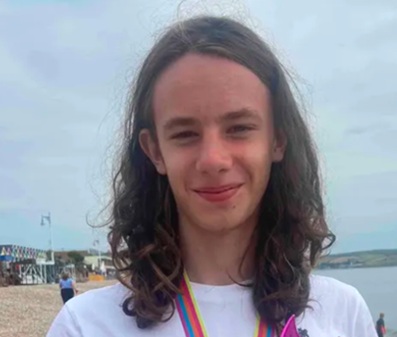
Fifteen-year-old Joshua Cox, a neurodiverse student-athlete from Rushall, has qualified to represent Great Britain at the 2025 UIPM World Biathle, Triathle and Laser Run Championships, taking place in Mossel Bay, South Africa this December.
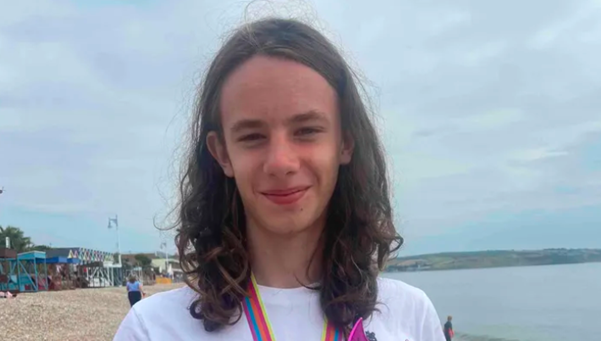
Josh, who has a dual diagnosis of Autism Spectrum Disorder (ASD) and Attention Deficit Hyperactivity Disorder (ADHD), has defied the odds to rise through the ranks in both Obstacle Course Racing (OCR) and Pentathlon GB sports, including Biathle and Laser Run.
Most recently, he secured 2nd place in the U17 Boys category at the National Biathle Championships in Weymouth, earning his spot on Team GBR in both the individual and mixed relay events.
Diagnosed with both ADHD and ASD, and also living with hypermobility and dyspraxia, Josh has shown remarkable perseverance. He continues to break boundaries and serve as an inspiration to young athletes, especially those who are neurodiverse or face barriers in traditional sport.
Can you tell us more about your sporting achievements?
I have represented Great Britain in Obstacle Sport Racing at the World Championships in Belgium in September 2023 & Sweden in September 2025 and at the European Championships in Italy in June 2024 & Portugal in June 2025.
This season I have achieved the following titles within the UK 3rd Place Spartan UK National Series 2025 in AG 14-17 and 3rd place British 12km OCR Championships 2025 AG 18-24
In Pentathlon GB disciplines I am the current 2025 British Schools LaserRun Champion for Year 10 and achieved 2nd place at the British Bialthe Championship 2025 in AG U17 men.
How did it feel to qualify for the 2025 UIPM World Biathle, Triathle and Laser Run Championships?
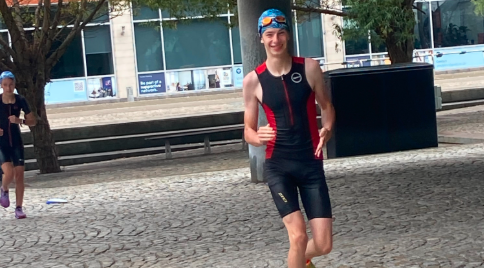
I was very nervous when I was competing in the qualifying event as I have not open water swimming as much as I swim in the pool therefore this was quite a scary experience. I am quite new to pentathlon GB sports having only been competing for 12 months, but to qualify was really exciting and I was very proud of myself.
How did you first get into the sport?
As a child I never really got on with team sports, I was constantly being distracted by other children, the colour of someone’s top or a noise. So I tried individual sports and excelled in Kickboxing achieving my junior black belt at age 10. I also loved to swim as a child – my first lessons were when I was only 3 months old and even learnt to Scuba Dive at 9 years old. As I got older I found structured swimming lessons very difficult with the noise and the distractions and therefore only got back into structured swimming lessons last year.
As a family we have always been involved in obstacle sports and when OCR 100m became the 5th discipline in Modern Pentathlon I joined my local pentathlon club, Target Sport Burntwood, in order to try all of the other disciplines. I started competing in Modern Pentathlon disciplines in 2024 so I am relatively new to the sport.
What preparation are you doing ahead of the games?
I swim once a week with Burntwood Swimming Club, do parkrun on Saturdays when I am not training or competing and training with Target Sport Burntwood once per week. My training consists of swimming, running and Target Sports. I also train with the North West Pentathlon Hub in Lancashire every month plus we have gym equipment and an OCR rig at home.
Can you tell us a little bit about your own experience with autism, ADHD and getting a diagnosis? How have you overcome challenges?
It took a lot of years for me to get my diagnosis, I was always the mischievous but clever child at school however there were definitely some obvious signs. As I was hitting all of my developmental targets then it was always put down to trauma as my parents had divorced when i was quite young and just being a rowdy boy.
I am very lucky that my local CAMHS service accepted my referral and I did get a diagnosis after a 2 year wait (covid was happening too). I was first diagnosed with ADHD and then a few months later received a secondary diagnsosis of Autism. I was diagnosed at 11 years old just before the end of primary school so had to start senior school without the school having any prior knowledge of my condition. I have always struggled with school and I’m now in Year 11 – I find it very hard each day, being different, looking different – my long curly hair isn’t trendy, and the pressure of GCSEs can be a lot to handle. However sport and activity is a great escape for me. I enjoy going to training and being able to focus on the activity. It can be like an escape from school life.
I also like the fact I do non-traditional sports and find individual sports are the best option for me. Non competitive sports I also enjoy include skiing, fencing and I am also learning to shoot air rifle.
In a recent obstacle race I lost all focus and although I was running really well and ahead of many in my age group I failed a few obstacles and this completely messed with my head. I broke down in the middle of the course and started to cry. Other young people and adults couldn’t understand why i was crying and I couldn’t tell them. I was scared people would think I was silly and judge me. A few people know I am autistic and they encouraged me to continue and finish. I want to tell other young people that I do still have many challenges and struggle to overcome them at times.
I get angry, I cry and need a hug from my mum and nan, I often feel very low about myself. I do however know that’s it ok to feel like this and there are people who love me and want to support me through the bad times.
What advice would you give to other aspiring autistic athletes about achieving their goals?
Its OK not to enjoy traditional team sports, try lots of different things and find the one that works for you. It is also really important to have a supportive team around you who understand your needs and when things are not going quite so well. I think the more we need to spread awareness of autism then the more others will understand.
Please join us in cheering Joshua on this December and sending him all the very best of luck for his upcoming journey to South Africa!