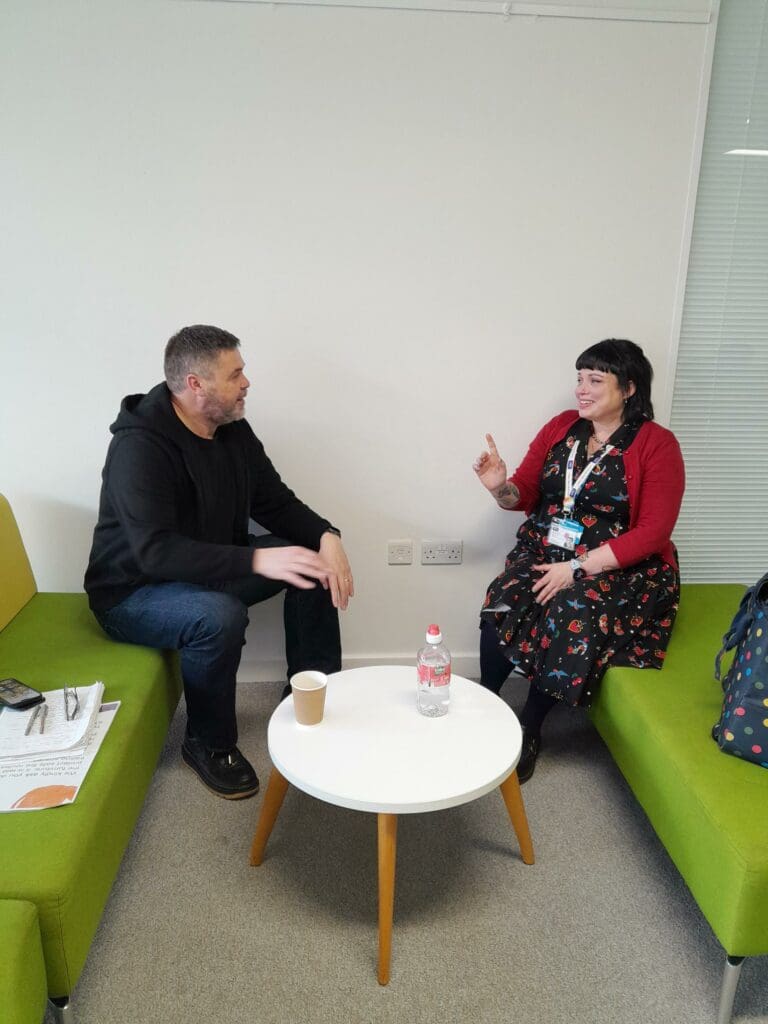



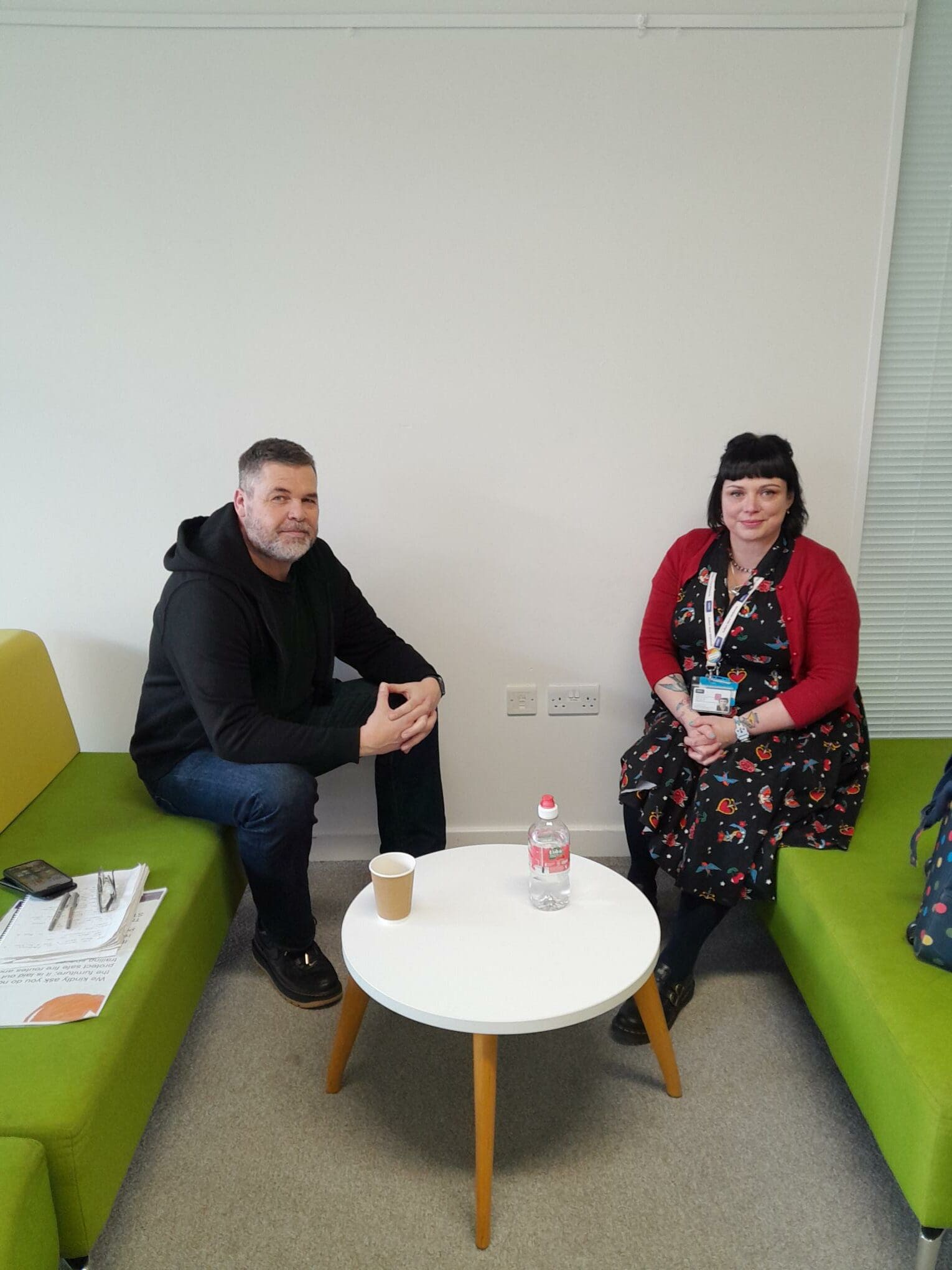
Faye works at Autism West Midlands as a Children and Young Person Autism Specialist and had a chat with us about her personal experience of autism and what impact this has in her work
WHEN DID YOU RECEIVE YOUR DIAGNOSIS? CAN YOU TELL US ABOUT THAT?
I received my diagnosis late- I was 51! I have always felt different to others, not getting why. My children are all neurodivergent and I realised – along with other things, that I must be the common link. My Children became my hyperfocus and a very specific interest, as soon as I became a Mother. Things started to make more sense to me, reflecting on my own life – I slowly rediscovered myself! It was beneficial to me, because it explained so much. If I’d been diagnosed earlier, it would have provided explanations to certain situations in my life and prevented a lot of anxiety that I experienced in previous situations. For example, there were situations where I was disregarded as one thing but looking back, I can see it was a case of autistic burnouts.
For me, my diagnosis is validating, my journey led me to self-identifying as autistic. I have always felt invisible and wrong, but I have been seen as me – autistic.
HOW DOES YOUR PERSONAL EXPERIENCE OF AUTISM BENEFIT YOU IN YOUR ROLE AT AUTISM WEST MIDLANDS?
People I support like the fact that I am autistic- it makes me relatable. Clinicians I work with also look to me for specific knowledge and advice as I have personal insight, along with my professional experience.
It is good to be able to support people, by being me.
DO YOU THINK YOU WOULD HAVE BENEFITTED FROM AN EARLIER DIAGNOSIS?
A benefit of being diagnosed earlier may have been having the correct support to understand, but more importantly people understanding me. Looking back, as my autistic self, I have very much been mis-treated, mis-understood and mis-diagnosed. I was given an anxiety and depression diagnosis, which were, me, being overlooked and mis-diagnosed as an autistic woman, with sensory experiences. I think maybe it would have been beneficial to have an earlier diagnosis, at least to have had the right information. For example, being highly emotional and highly empathetic (to point of overload) – it was thought of, as part of diagnosis, that to be autistic, you had no empathy and no emotions.
I would like to have known me, my true autistic self, a lot sooner in my life!
WHAT IS YOUR EXPERIENCE OF MASKING?
Because I was diagnosed later, I spent a lot of my life masking, and I still do to this to this day! When I was younger, I was always seen as very shy. Feedback from teachers at school from a young age was that I was always sort of hiding behind others and I also always thought that they were wrong, and I was right. I was held back a lot, in my learning, as I was ahead, there were many injustices and I didn’t understand, at all, why they happened.
I was picked on at Secondary School, as I wanted to learn, and I put my hand up all the time. I learned to become what I was supposed to be, from a very young age. I didn’t really understand the others at all, at school. I have always been fascinated though, watching, trying to understand and camouflage. Masking is mostly, a very unconscious thing for me- I still spendso much time scanning people, their reactions and the environment to try and read situations. This can be exhausting! A big step for me was learning about who I actually am, without my mask. Slowly over time, I have been allowing my mask to fall, but that has been hard and a little confusing too, after so long. However, over the years, the level of my masking, camouflaging and fawning, has added to my overwhelm, inescapable fatigue, sensory meltdown, migraine and burnout.
HAS YOUR EXPERIENCE OF NEURODIVERSITY BEEN DIFFERENT WITH YOUR OWN CHILDREN?
I have 3 neurodivergent children who are all very different- with similarities and differences to myself, not all of them have had an official diagnosis yet. There have been many situations where they have been failed because of their differences and not presenting in a specific way. I am autistic, but I haven’t always known this, however, I feel that I have parented them to understand and celebrate themselves. I have been able to understand and connect in a very specific way with my children and support their neurodivergence. However, even when my eldest was younger, there was the ‘triad of impairments’ and him being highly empathetic and emotional (like me), this took my autistic son out of that diagnostic ‘triangle’. Plus, my young Daughter presents and experiences in ways that differ from historical information.
I have found that I have been able to be a good advocate and encourage them to self-advocate. I very much dislike the term ‘high functioning’, as this does not capture an autistic person’s experience – just how well they fit into society. As a family, we have found that not always having a visible disability is still a societal issue.
WHAT IS YOUR EXPERIENCE OF THE GENDER DISPARITY IN DIAGNOSIS?
Girls are still not as diagnosed as boys, although the gap is getting smaller. I see from my work that there is more social pressure on girls to mask and this can have negative effects. However, boys often get labelled and have behaviours picked up, due to gender stereotypes. There are many incorrect assumptions around how an autistic child should present, often girls feel more of the negative effects of that. I felt that I had undiagnosed post-natal depression, following the births of my children, in fact I can now honestly say that I was in autistic burnout.
WHAT ADVICE WOULD YOU GIVE TO YOUNG AUTISTIC PEOPLE?
Always remember your ‘right to choose’, when looking at getting a diagnosis, if that is what you would like. If you are awaiting a diagnosis, investigate what support you might need and try to gather as much information about you, as a person, as possible. Remember to always stick up for yourself to make sure you get everything you can, to support you! Being independent, isn’t always doing everything on your own!
Just try and be as true to yourself as you can – be you. Find your stim/s, these are yours and can be a part of your experience and regulation. Take time out! Take breaks and just be mindful of your senses and environment.
“Be proud, be comfortable and be your beautiful autistic self-no apologies needed!“